Youth unemployment and underemployment
Too many graduates enter the labour market with no prospect of a job and no ability to start their own activity.
Le Sage Entrepreneur
“Every African child has an idea. School must teach them to turn it into a project.”
A complete collection of school and university textbooks to build entrepreneurial culture from nursery school to Master's level.
The situation
Africa has the world's largest youth population. It also has the education system that least prepares them to create value. Between leaving school and entering working life, the same link is missing: the ability to turn an idea into a project.
of young Africans
leave the school system without operational entrepreneurial skills.
Figure attributed to UNESCO in the project document.
of African graduates
are underemployed or out of work.
Figure attributed to the World Bank in the project document.
more skills
in problem-solving and leadership among pupils exposed early to entrepreneurial culture.
Figure attributed to the OECD in the project document.
a learner's ability
to turn an idea into a viable project before the age of 25, thanks to a unified educational continuum.
Estimate put forward in the project document.
Figures taken from the project presentation document (January 2026). They must be verified against the cited sources before any official publication.
Too many graduates enter the labour market with no prospect of a job and no ability to start their own activity.
The mismatch between school pathways and the real needs of the economy holds back employability.
Creativity, project management, decision-making and initiative are still rarely taught in a structured way.
In Africa, entrepreneurship education often remains occasional or confined to a single level: no coherence, no lasting impact.
The fourth industrial revolution and artificial intelligence call for new skills from school onwards.
The SND30 makes human capital the engine of the structural transformation of Cameroon's economy.
In Africa, fragmented initiatives are showing their limits: no coherence, no lasting impact.
Our answer
LE SAGE ENTREPRENEUR supports learners throughout their educational journey, with a progression suited to their age and level. Each stage builds on the previous one and prepares for the challenges of the next.
Cycle foundation · Nursery cycle
Nursery
Awaken the entrepreneurial spirit through play: stories, games, simple instructions and hands-on activities.
Because the collection is complete, it avoids breaks in the learning of entrepreneurship. Pupils grow up with LE SAGE ENTREPRENEUR from the beginning to the end of their schooling — a continuum unprecedented in Africa, where entrepreneurship education initiatives have so far remained occasional or confined to a single level of study.
The collection
A collection of textbooks and teaching materials organised in cycles, ensuring a harmonised progression of entrepreneurial learning throughout school and university.
Awaken curiosity, creativity and self-confidence through play, storytelling and mini-projects.
Consolidate the basics of economics, finance and technology, and move into practice through mini-enterprises.
Deepen management, innovation and leadership, all the way to the incubation of real projects.
Click a cover to enlarge it. The back cover can be viewed where one was supplied.
Overall artwork supplied with the project. Click to enlarge.
Covers for all twenty levels are now online. The site architecture is ready to host, for each volume: page previews, learning objectives, subjects covered, number of volumes and teaching notes for educators. Final titles will be published as soon as they are provided.
Reserved space
What sets us apart
LE SAGE ENTREPRENEUR is not a set of school books, but an integrated programme designed to shape a generation of entrepreneurs rooted in their culture and open to the world.
Key notions — economic concepts, management, simplified finance, marketing — are introduced gradually and adapted to each age group, from primary school to Master's level.
Examples, case studies and exercises are drawn from learners' familiar surroundings: a village farming cooperative, a craft workshop, a technology startup.
African names, local customs, a central place for the continent's history, and a spotlight on African icons of entrepreneurship.
Design thinking, the Lean Startup method, digital transformation: a curriculum validated by academic and professional experts.
Learners learn by doing: mini-projects, educational mini-enterprises, entrepreneurship clubs, incubation of real projects.
The entrepreneur is presented as a modern hero — courageous and of service to their community: self-confidence, resilience, ethics and leadership.
Africa at the heart of the programme
The programme is not a foreign model transposed onto Africa. Characters bear African names, situations reflect local customs, and the continent's history holds pride of place.
Each textbook highlights African icons of entrepreneurship: industrialists, innovators and social leaders, including in the diaspora.
A village farming cooperative, a craft workshop, a technology startup in Yaoundé: entrepreneurship as an opportunity rooted in the community.
The continent's own knowledge and practices are valued on a par with international standards.
Revaluing African culture as a driver of peace, cohesion and pan-African cooperation.
By showcasing African success stories, the programme feeds young people's ambition, dismantles stereotypes and strengthens their self-esteem — an approach in line with UNESCO's aim of inspiring pride and identity linked to African heritage among learners.
The intended impact
Creators.
Innovators.
Employers.
Responsible citizens.
African builders.
Citizen-producers, ready to create solutions before creating résumés.
Less dropping out, more initiative, more local value creation: LE SAGE ENTREPRENEUR is a training chain for the citizen-producer, designed for the Africa that actually exists.
Strategic alignment
LE SAGE ENTREPRENEUR is built in coherence with the national, continental and international strategic frameworks that shape today's educational and economic policies.
Cameroon
National Development Strategy 2020–2030
The nine priority sectors of the SND30 are built into the collection. The project directly serves the “human capital development and well-being” pillar.
Global
United Nations Agenda 2030
A cross-cutting contribution to the Sustainable Development Goals, in particular SDGs 4, 8, 9, 12 and 17.
Africa
African Union — “The Africa We Want”
The project answers the aspirations of an Africa that is prosperous, educated, culturally confident and driven by its youth.
Education
International education frameworks
Learner-centred, inclusive teaching focused on 21st-century skills, in line with the Education 2030 initiative.
African development
African Development Bank
Feed Africa, Light up Africa, Industrialise Africa, Integrate Africa and Improve the quality of life for Africans: five priorities woven throughout the content.
Sustainable Development Goals
By training responsible and innovative future entrepreneurs, the programme acts across the United Nations Sustainable Development Goals.
Embedding entrepreneurship training in education can “make a significant contribution to achieving economic development goals and to students' individual well-being”.
Agenda 2063 — African Union
Beyond the national framework, the programme is in harmony with the pan-African vision set out in the African Union's Agenda 2063, and responds concretely to several of its aspirations.
Aspiration 1
Inclusive growth and sustainable development, driven by a highly skilled, enterprising workforce and by a skills revolution underpinned by science, technology and innovation.
Aspiration 2
From pre-nursery to Master's level: entrepreneurial thinking, decision-making, cognitive autonomy and love for one's continent.
Aspiration 5
African names, examples, stories and heroes at the heart of the content: anchoring awareness of African identity, heritage and culture.
Aspiration 6
Building on the potential of Africans, particularly women and young people: self-fulfilment, access to education and to employment.
By embedding the aspirations of Agenda 2063 in its philosophy and content, the programme relies on education and youth to build an Africa that is prosperous, integrated, culturally confident and driven by its citizens.
Pedagogy
The collection was designed in keeping with UNESCO's educational principles: inclusive, active teaching focused on 21st-century skills, in line with the Education 2030 initiative.
“What if every student left campus not only with a degree, but with the skills to launch innovations, solve problems and employ others?”
The four pillars of education
Structured knowledge in economics, management, finance, marketing and innovation, building from one level to the next.
Developing concrete projects, from the primary-school mini-project to university incubation.
Initiative, self-confidence, resilience in the face of failure, and personal ethics.
Collaborative activities and an understanding of the socio-economic environment, in the service of peace and living together.
The sectors of tomorrow
Knowledge and tools relating to the priority sectors of the National Development Strategy 2020–2030 are built into the collection. Training young people in entrepreneurship means preparing skills for each of these key sectors.
Priority sectors as listed in the project presentation document, with reference to the SND30.
A project that mobilises the ecosystem
From basic education to vocational training, taking in youth affairs, higher education and the economy, the project overlaps with the stated priorities of several government departments.
An important clarification. The institutions listed below are not partners of the project. This section presents only the convergences identified between LE SAGE ENTREPRENEUR and the public priorities of each department, as analysed in the presentation document.
MINEDUB
Ministry of Basic Education
Building an entrepreneurial mindset from the earliest years, in line with competency-based curricula and their pre-vocational skills strand.
MINESEC
Ministry of Secondary Education
A coherent pathway from middle school to general and technical high school, focused on practical know-how: project management, finance, marketing.
MINESUP
Ministry of Higher Education
A contribution to the professionalisation of degree programmes and to graduate employability, upstream of the entrepreneurial university.
MINJEC
Ministry of Youth Affairs and Civic Education
Preparing the future beneficiaries of youth schemes to become economically autonomous and socially responsible citizens.
MINEFOP
Ministry of Employment and Vocational Training
Multiplying self-employment opportunities and preparing apprentices to launch their own workshop or business once qualified.
MINEPAT
Ministry of the Economy, Planning and Regional Development
A structuring project for human capital, aligned with the SND30's “human capital development and well-being” pillar.
MINFI
Ministry of Finance
Investment spending on human capital, with measurable results and a gradual rollout through regional pilot projects.
MINPMEESA
Ministry of SMEs, Social Economy and Handicrafts
Feeding the pipeline of qualified project holders, in line with the promotion of entrepreneurial culture across the population.
SGG
Secretariat General of the Government
A cross-cutting project — education, youth, employment, finance, economy — illustrating a holistic approach to development.
Why support the project
Supporting LE SAGE ENTREPRENEUR is a strategic and responsible choice that brings together the common good and your own objectives.
Investing in human capital and wealth creation: the future job creators trained by the programme will contribute to growth and to reducing unemployment.
Associating your brand with education, youth and sustainable development — values held in high regard by the public, consumers and the authorities.
Taking part in the emergence of talent, startups and your future colleagues, innovative suppliers or customers.
Associating your organisation with a pioneering pan-African education initiative and gaining visibility nationally and internationally.
Help shape the next generation of leaders while strengthening your position within the country's socio-economic community.
Become a partnerOur sponsorship packages
Four flexible packages so that every partner can find a level of commitment suited to their visibility and impact objectives.
Title sponsor
The highest level of contribution: lead partner of the project.
Major sponsor
A leading partner, with a significant contribution.
Associate sponsor
Targeted support, directed at the part of the project that matches your priorities.
Awards & events
A one-off contribution, focused on a highlight of the project year.
“All our sponsorship packages can be tailored in consultation with our partners.”
How to support the project
Depending on your profile — company, public body, NGO, foundation or individual patron — and on your objectives.
Financial sponsorship of the project, funding the publication of a textbook or of an entire school level, grants for pilot schools and school entrepreneurship clubs.
01Teaching materials, computer equipment for coding workshops, science kits, access to training rooms and resource centres, expertise.
02Becoming an ambassador for the project, helping it reach new schools, regions and African countries, and supporting outreach to decision-makers and international organisations.
03The people behind the project

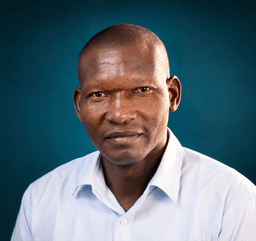
Lead author and project holder
Entrepreneurship expert · Director of Research and Innovation at Industrial Consulting World
Strategic adviser and institutional representative of the project
G100 Leader · Ambassador of Solutions for Africa · Vice-President for Africa of the Tamkine Foundation

Every African child has at least one idea. School must teach them to turn it into a project.
Education is the most powerful weapon which you can use to change the world.
Contact
Are you a company, an institution, a foundation, an NGO, an educational establishment or a patron? Let's talk about your contribution to LE SAGE ENTREPRENEUR.
Your dedicated contact
Ibrahim Maxime Julien
Lead author and project holder
Your dedicated contact
Mme Marie-Victoire Vénus-Ploton
Strategic adviser and institutional representative of the project
A detailed presentation pack and a tailored partnership proposal can be sent to you on request.
Fields marked with an asterisk are required.
Together, let us awaken the entrepreneurial genius of our young people and build our future on the solid foundations of education, innovation and action.
“Africa does not need spectators, but builders. Every project is a seed that can feed generations.”Ibrahim Maxime Julien